


The 2023 Venice Film Festival triumphed despite the SAG-AFTRA strike keeping the actors away, allowing the films instead to shine. As the festival draws to a close, here are my 15 recommendations* from the Biennale – the top two, in particular, are superb.
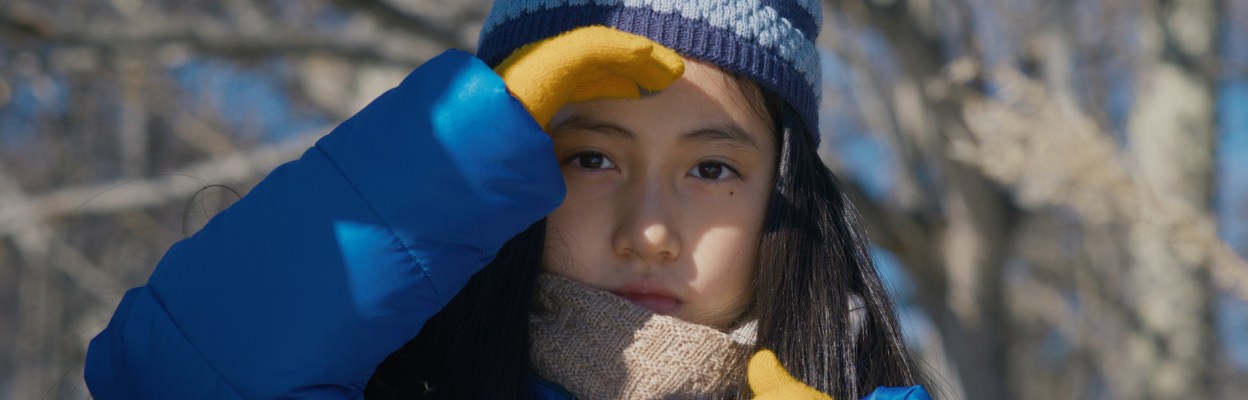
- Evil Does Not Exist (Hamaguchi) Transcendent, funny, enigmatic, sublime. This is top-drawer Hamaguchi, starting off slow and careful, painting a picture of a tight-knit rural community, then gracefully complicating the scenario before ascending to an entirely different plane altogether. This film is so quietly sure of itself, to artfully put together that it makes it all look easy. Some may be disappointed it lacks the obvious look-at-me grabbiness of, say, Drive My Car, and doubtless it suffered a little for distracted people trying to cram it in between multiple festival viewings. But they’ll be proudly talking about “rediscovering” it in a few years. This is Hamaguchi’s most mature film to date, a quietly mature masterpiece that gives space for the audience to do their own work. A work of enigmatic beauty, this is my hit of the fest, and quite possibly of the year.
- Poor Things (Lanthimos) A sci-fi/fantasy/horror satire of self-realisation, in which Emma Stone gets to really let loose: dancing, demanding, divining and trying to punch babies as she cuts a swathe through an alternative fin-de-siecle Europe as the unwittingly Frankensteined creation Bella Baxter. As she gleefully embraces everything from sex work to science, socialism and custard tarts in her desire to find how best to live, Mark Ruffalo is a hoot as the caddish lawyer vainly attempting to subjugate her. Sumptuous and demented.
- The Killer (Fincher) Fincher’s sly parody of the “existential hit man” trope is a technical marvel – you won’t see better blocking and framing, more seamless use of CGI, or greater use sound design this year. I don’t think there’s anyone in greater control of a director’s toybox. This is all in service of a stripped-back propulsive narrative as we follow Michael Fassbender through an escalating series of assassinations after a job goes wrong. Throughout, Fassbender’s precise voiceover assassin-splains the nature of his job to us, the audience – but as things drift out of his control a gap between theory and practice is wryly established. The craft of killing and the craft of film direction are implicitly compared – a fun subtext for anyone following Fincher’s career. This also has the best one-on-one brawl of the year: move over, John Wick 4.
- El Conde (Larrain) Go in cold to this one, as there’s some third-act action that they wisely withheld from the trailer. This savage, righteous, but very funny film asks – what if Augusto Pinochet, erstwhile dictator of Chile, was in fact a vampire, still skulking around in hidden retirement? The basic idea may be a little superficial, but I found this film’s sly playfulness to be a delight.
- Woman Of… (Englert, Szumowska) A beautiful, epic tale of embracing transness, set against the fall and rise of Poland in the aftermath of the Soviet era.
- The Wonderful Story of Henry Sugar (Anderson) Wes Anderson revels in his nested-narrative metafictional happy space with this delightful concoction, in which everyone is clearly having a lot of fun. …Henry Sugar fully embraces its own artifice, in a way that is warmly inviting rather than Brechtian and alienating.
- Hitman (Linklater) As a regional screwball noir this carries Coen Brothers inflections, but follows its own amusing path as Glen Powell’s university lecturer and part-time decoy hitman gathers actionable intelligence on would-be murderers in the New Orleans area. Powell as co-writer gives himself plenty of opportunities to shift personas and also be incredibly hot. This is a story about a meek man who invents a suave, dangerous alter-ego who gradually takes over his life. As such it’s fun to image what late -period Cronenberg would have made of this material, although Linklater opts not to go that dark and keep things spritely and fun. Sexy, playful, and full of laughs.
- Vermines (aka Infested, Vanicek) Attack The Block meets Arachnophobia in the Paris banlieues. Enormous fun, and the best jump-scares of any horror this year.
- Green Border (Holland) This gruelling multi-perspective view of the manipulation of migrants at the Belarus-Poland border will absolutely wring you out. As guards on both sides abuse the refuges, taking turns to push them – or their corpses – back and forth across the border, local volunteers do what they can to protect them – opening themselves up to incarceration or worse. The bleak black and white photography is unsparing.
- Maestro (Cooper) – Clearly conceived with an awards run in mind, but that’s no sin. I’m possibly out on my own in thinking that the earlier, black and white 50s-set sequences are less interesting, and the film opens up and breathes when it switches to colour. My favourite scenes are the bravura six-minute unbroken shot of Cooper (as Bernstein) conducting Mahler’s Resurrection Symphony at Ely Cathedral, and the image of the Bernstein marriage collapsing on Thanksgiving, as a giant Snoopy quietly passes the window.
- The Theory of Everything (Kroger) – A junior doctor of physics investigates the disappearance of a charming jazz pianist at an isolated physics conference, in this chilly alpine mystery that remixes certain sci-fi tropes to haunting effect. Crisp black and white photography means you can feel the coldness at the back of your throat. More than a touch of Nigel Kneale’s Quatermass in this one, which is high praise indeed.
- Tatami (Nattic, Ebrahimi) – While Tatami gradual grows into a strong, paranoid political thriller, my favourite section is still the first act, where it functions more as a punchily-effective sports flick with Iran taking on the world at the women’s World Judo Championships in Tbilisi. When it looks like Iran may come to face Israel, home-grown threats are made against the Iranian competitor. Riveting.
- Society of the Snow (Bayona) – A strongly crafted tale of the 1972 Andes air crash survivors and their struggle to cling on to life. Bayona utilises all the techniques of his horror career to convey the sheer existential dread as days turn into weeks and even months of isolation and cannibalism, in the seemingly endless white expanse.
- Priscilla (Coppola) – I really loved the early sequences set at the air force base where a 14-year-old Priscilla Beaulieu meets Elvis Presley, the world’s most famous GI. Coppola’s eye for a milieu-setting montage is second to none, and she conveys just the right level of deadpan, sympathetic WTFery as Presley begins his wooing process. My favourite scene? Matching guns to dresses – echoes of Scorsese’s Casino. A thoughtful story of grooming and escape.
- Memory (Franco) – Franco’s unshowy direction allows Jessica Chastain and Peter Sarsgaard to channel the emotional heft of this story, which is very good if a bit Sundancey. Sarsgaard is the standout, but it’s always a delight to see a Jessica Harper cameo, consistently elevating the material. Probably a career best for Franco.
Also recommended: Ferrari (Mann), Origin (DuVernay), Enea (Castellitto), Hoard (Carmoon), Sky Peals (Hussain).
* and one disappointment…
After the sublime Nocturama, Zombi Child, and Sarah Winchester: Ghost Opera I’ll watch anything Betrand Bonello directs, but The Beast proved a huge misfire – a collection of half-baked themes and knock-off ideas that utterly failed to cohere. A metaphysical tale of star-crossed lovers doomed to live, love, and fail across time and space, The Beast is somewhat based on a Henry James novella but more brings to mind films like 2046 and (in particular) Cloud Atlas. Bonello can’t help but be intermittently interesting, but this scattershot mess is emphatically Not It. If you’re going to close with a rip-off of Twin Peaks The Return, you have to do better than this.
The Venice Film Festival ran from Aug 30 – Sept 9, 2023.
 Whitlock&Pope