
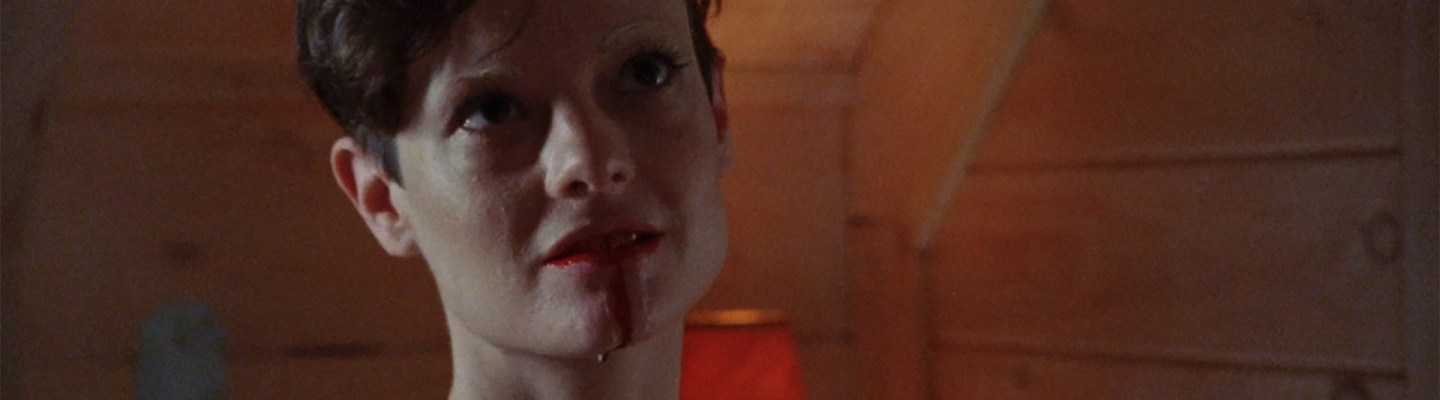


Black Eyed Susan, directed by Scooter McCrae, has premiered at the Fantasia International Film Festival, marking McCrae’s return to feature filmmaking after a 25-year hiatus. The film tackles dark and controversial themes of domestic abuse and the ethical implications of advanced AI technology. Sadly, despite its provocative premise, the film ultimately falls short of delivering a truly insightful or novel exploration of its themes.
The story follows Derek (Damian Maffei), a down-on-his-luck man hired by a tech industrialist to test an advanced AI sex doll named Susan (Yvonne Emilie Thälker). Susan is designed to endure and “enjoy” abuse, raising immediate ethical and moral questions. Derek’s initial hesitation gives way to a disturbing fascination with Susan’s developing personality, leading to a series of unsettling and violent encounters.
The film attempts to tackle heavy themes such as the normalization of abuse, the commodification of human suffering, and the ethical boundaries of AI technology. However, the execution of these themes feels superficial and lacks depth. The narrative progresses in a uninteresting manner, with the issues raised being reminiscent of introductory discussions in any ‘philosophy of morals’ course – right down to a late-breaking “aha, but what if” turn that ups the stakes, but feels hopelessly crass. In fact, the film’s rhetorical structure generally feels simplistic, failing to fully explore the complexities of the moral paradoxes it presents.
Visually, Black Eyed Susan employs a rudimentary style that does little to enhance the storytelling. The cinematography, while competent, lacks the creativity and nuance needed to elevate the film’s provocative subject matter. The lighting and blocking is largely bland, missing opportunities to create a more immersive and unsettling atmosphere – save for one sequence where Derek is given a demonstration of Susan’s body by his boss. Here the close-up framing sections Susan into various constituent parts – a rare example of visual storytelling in what is overwise a very static, prosaic delivery.
The sound design, on the other hand, is more effective in conveying the film’s dark tone. The unsettling score and realistic sound effects contribute to the overall sense of discomfort and tension. However, these elements alone are not enough to compensate for the film’s other shortcomings. The heavily objectifying pornographic-style dialogue does a lot of heavy lifting too, but gradually loses impact as the film drags on.
Damian Maffei delivers a solid performance as Derek, capturing the character’s internal conflict and descent into moral ambiguity. Yvonne Emilie Thälker, in their feature debut, brings a haunting presence to Susan, effectively portraying the AI’s evolving personality and the disturbing nature of their existence. Despite their strong performances, the characters themselves are not given enough depth or development to fully engage the audience.
While Black Eyed Susan starts with a strong and provocative premise, it ultimately fails to deliver a compelling or insightful exploration of its themes. The film’s narrative is predictable, and its visual language is mostly rudimentary. The final scene, featuring a calm voice emanating from Susan’s damaged face, stands out as a memorable moment, but it is not enough to redeem the overall experience.
In comparison to other films that tackle similar themes, such as Lars von Trier’s Nymphomaniac, Black Eyed Susan lacks the dark humor and deeper exploration of moral conundrums that could have made it more engaging. The film’s heavy-handed approach and lack of novelty leave much to be desired, making it a challenging watch without sufficient payoff.
Black Eyed Susan is a film that raises important questions but fails to provide meaningful answers. Its provocative imagery and themes may spark discussion, but the execution leaves much to be desired. For those seeking a more nuanced and insightful exploration of similar themes, other films may offer a more rewarding experience.
The Fantasia Film Festival runs July 18 – August 4 in Montreal, Canada.
 Whitlock&Pope