


★★
Congratulations, it’s a dud.
After several years of production, Paramount have finally brought their Rosemary’s Baby prequel to term. In the face of rumoured delays, rewrites, and other behind-the-scenes challenges, including shifts in the direction of the narrative and creative differences among the production team, Apartment 7A is finally here.
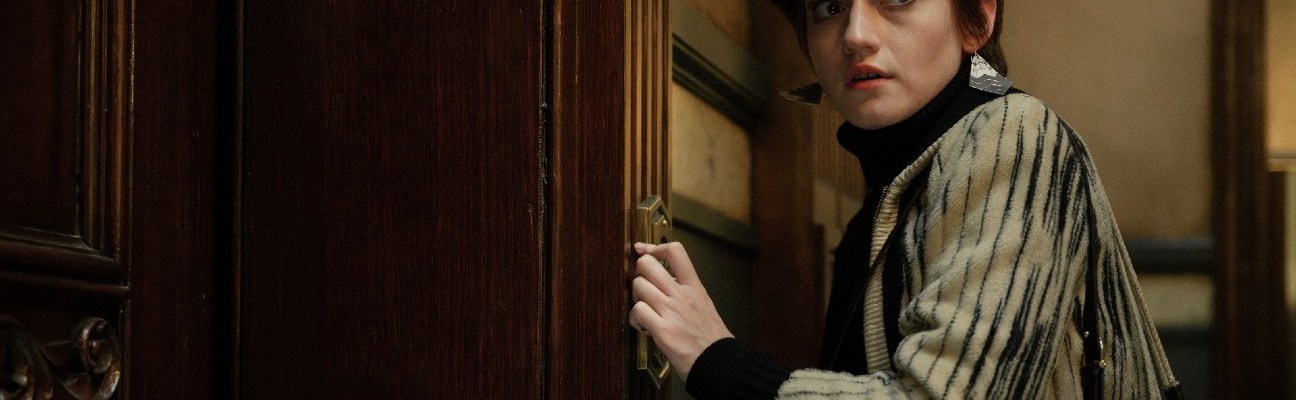
It’s the late-60s, and Terry Gionoffrio (Julia Garner, trying her best), is a young wannabe Broadway dancer, whose dreams are seemingly ended by a severe injury. only to be seemingly revived by a chance encounter with the Castevets (Dianne Wiest, delightfully game, and Kevin McNally). This older, wealthy couple take her in to live in the prestigious Bramford Building, a neo-gothic apartment block where Terry is introduced to a new world of opportunity.
Terry’s encounter with fellow resident Alan Marchand (Jim Sturgess, functional), a charismatic and influential Broadway producer, offers her a new shot at the stardom she desperately seeks. However, after a mysterious and hazy night, Terry finds herself pregnant, and caught in a web of unsettling events that force her to question the true nature of her newfound fortune and the intentions of those around her. As Terry delves deeper into the secrets of Apartment 7A and the Bramford building, she must confront the sinister forces that surround her.
The supporting cast, including Marli Siu (who deserves better), Andrew Buchan, Rosy McEwen, and Kobna Holdbrook-Smith, do their best, but the problem here is the script. It’s an attempt to blend suspense, supernatural elements, and an exploration of the price of ambition, but it’s badly paced and never remotely compelling. The real issue is that we know exactly what the Castevets are up to, and we know broadly what the ending will be – so what might have been a gripping psychological thriller is just a badly-paced trudge through a pre-ordained path to arrive at a familiar destination. It doesn’t help that so much of Terry’s journey mirrors Rosemary’s – it rapidly becomes clear that the evil plot is exactly the same, and a number of set pieces mirror the original film, including the hallucinatory conception (which at least here has some Broadway influences in the staging, showing a flicker of artistic creativity).
Everything builds to a climax that will be deeply familiar to fans of the original, but the staging and execution are given a clever spin that elevates the material and reflects Terry’s very different personality. It’s the one truly good scene in the film, but its too little too late – especially as production delays and reshoots have left Apartment 7A emerging in the tail-end of a glut of similarly themed pictures that rob this one of any shock it might have had (Immaculate, The First Omen and Azrael are all superior).
It could certainly be worst – to reassure anyone who’s seen the rarely-acknowledged 1976 sequel Look What’s Happened To Rosemary’s Baby, it must be said that Apartment 7A is at least by some distance the second-best in the trilogy.
It does raise the question though – after The First Omen, Pet Sematary:Bloodlines, and going back at least as far as the 2011 The Thing, isn’t it time to say that horror prequels are just not working out for us? It’s just very hard to generate true dread when you know where the narrative will end up. Even Alien Romulus only just got away with it. Apparently one complaint from test screening audiences was that the exact connection between Apartment 7A and the original film was unclear. This problem has been solved with a reshot mid-credit sequence that ties them directly together in a way that smacks you over the head. There’s now no scope to misunderstand the connection, but alas still not much scope to enjoy the film.
Apartment 7A premiered at Fantastic Fest on 20 September, and is streaming on Paramount+ and available on VOD from 27 September.
 Whitlock&Pope