


★★★
Animale is a visually striking and thematically rich genre film that explores gender, identity, and transformation, but ultimately shies away from its more outer horror elements.
Animale, directed by Emma Benestan, is a genre-blending fantasy-drama about the strange events that overtake Nejma, a 22-year-old bull-runner trying to navigate her way through the male-dominated sport of bull-running in the Camargue region of France.
After a hallucinatory night out, Nejma is left with an unexplained wound, and soon her fellow bull-runners are being gored at night by a mysterious bull. Genre movie fans will put together the pieces somewhat fast than the movie does (there are some spoilers below), as Nejma finds she must must confront societal expectations, gender dynamics, and an unexpectedly visceral personal transformation.
Oulaya Amamra delivers a compelling performance as Nejma, portraying both strength and vulnerability as her character struggles to assert herself in an environment where despite her commitment to her sport, she is viewed through the lens of gender. Her transformation, though metaphorical, mirrors her psychological and emotional journey, exploring themes of rage, identity, and defiance.
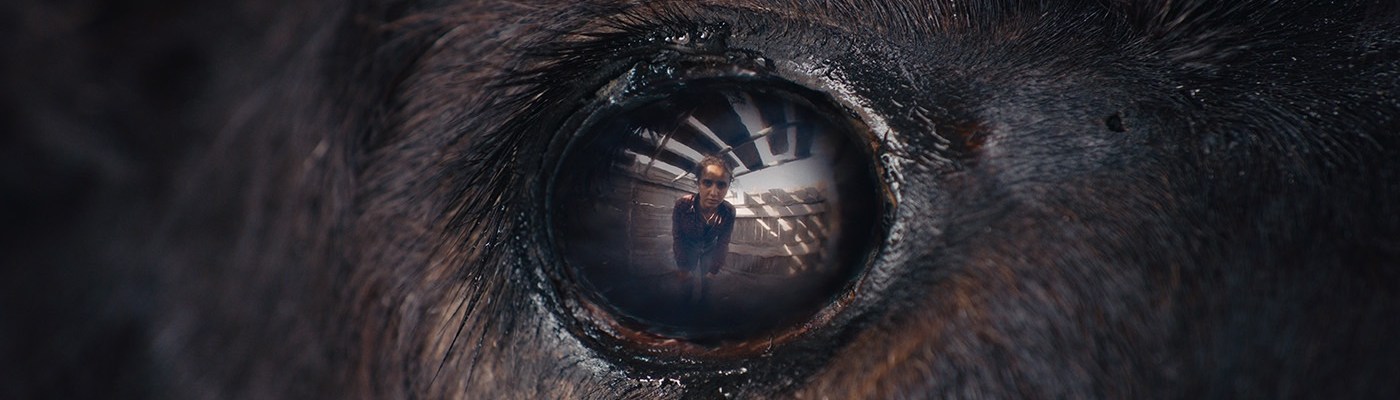
Visually, the film excels in capturing the rugged beauty of the bulls and the landscape, drawing parallels between Nejma and the animals she works with. Cinematographer Ruben Impens captures the bulls’ power and vulnerability, emphasizing their status as both fierce competitors and victims of exploitation. Visual parallels are deftly drawn with Nejma’s character, as she navigates a space where both she and the bulls are seen as commodities in a spectacle dominated by traditional masculinity.
However, “Animale” doesn’t fully commit to its body-horror potential, favoring character-driven storytelling over exploring the darker implications of Nejma’s condition. The narrative often pulls back from horror, using the metamorphosis more as a symbol of Nejma’s internal battles rather than a visceral experience for the audience. This approach keeps the film grounded in reality but also leaves some of its most intriguing elements underdeveloped. The physical makeup, briefly glimpsed in the dark towards the end, is an effective and original take on a mid-transformation were-creature – more creature down one side, more human down the other.
The film also somewhat evades the ethics of bullfighting, aligning Nejma’s ambitions with a more humane perspective by focusing on a form of the sport (pulling tokens from between the bulls’ horns) that avoids harming the bulls.
Animale is at its best when it explores the interpersonal dynamics and societal pressures Nejma faces. It delves into the psychological toll of being a woman in a hyper-masculine world, where every success and failure is magnified by gender expectations. These themes are underlined through almost all of Nejma’s interactions and through the film’s loaded atmosphere.
Nevertheless, the narrative occasionally feels predictable and familiar, and some viewers will doubtless be disappointed that it doesn’t deliver the gonzo catharsis for which many will be aching. Like last year’s My Animal, this is a were-movie that aims for thematic resonance and emotional stakes, but in focussing on those things decides not to give the monster movie elements that many would be hoping for.
You can’t judge a film too harshly for what it isn’t, though, and this is a visually striking and thematically rich film that explores the complexities of gender, identity, and transformation. While Animale doesn’t fully embrace its horror elements, it does present a compelling portrayal of a young woman’s struggle to assert her place in a toxic, masculine world. Emma Benestan’s direction, combined with Amamra’s standout performance, ensures that Animale leaves a lasting impression, even as it treads predictable narrative ground.
Animale played at Fantastic Fest
 Whitlock&Pope