


★★★★★
An anti-Fairytale of New York, Anora is an emotional triumph—a Cinderella story for a doomed generation, blending humor, romance, and heartbreak against the backdrop of a gritty anything-can-happen Big Apple. Mikey Madison delivers a fearless, captivating performance that’s sure to propel her to the top of the Oscar predictions, in Sean Baker’s most powerful and reflective film to date.
This review may reveal later elements of the plot.
Sean Baker’s Anora marks a bold and striking entry in his body of work, continuing his fascination with characters on the margins of society, particularly sex workers. Known for Tangerine and The Florida Project, Baker’s films often explore the lives of those overlooked by mainstream cinema, but always with a rawness that avoids romanticization. In Anora, Baker dives headlong into a whirlwind of romance, denial, and betrayal, delivering what could be described as a Cinderella story for a doomed generation, albeit one steeped in disillusionment and chaos.
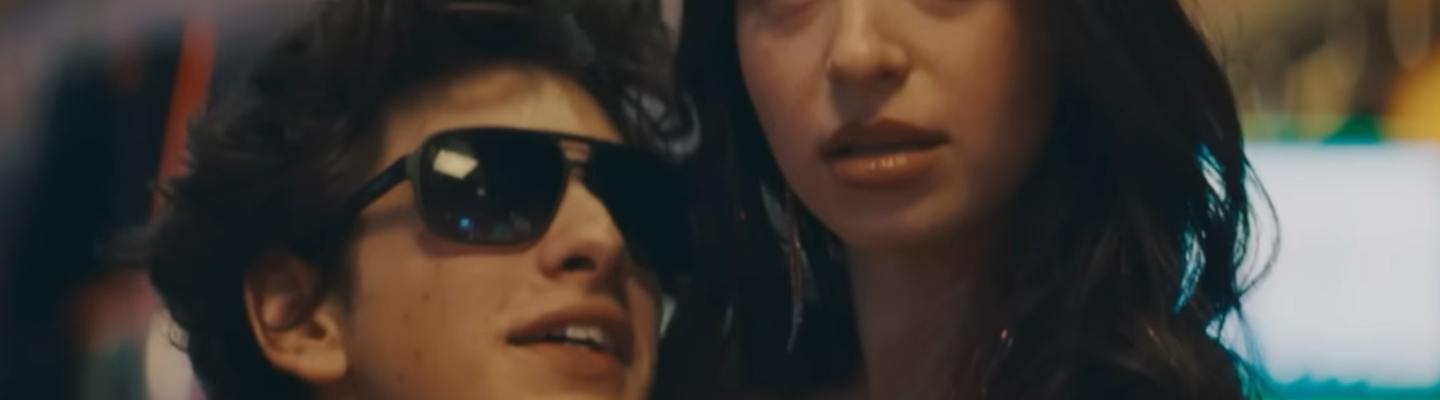
Anora centers on Ani (Mikey Madison), a New York table dancer and escort who unexpectedly becomes involved with Vanya (Mark Eydelshteyn), the brattish, entitled son of a Russian oligarch. Their relationship, seemingly transactional at first, quickly escalates as Ani is swept into Vanya’s world of easy money, opulent mansions, and spontaneous trips to Vegas, culminating in a hasty wedding. Yet, as with all of Baker’s films, the fairytale quickly sours, with Ani’s dreams unraveling as Vanya’s family steps in, sending the film into a downward spiral of recrimination and chaos.
In many ways, Anora feels like an extension of Baker’s previous works, both in its thematic concerns and its filmmaking style. Baker’s camera remains intimate and unflinching, capturing the hyper-realism of the urban underbelly without judgment. This is the same world of hustlers, dreamers, and sex workers that populated Tangerine, The Florida Project, and Red Rocket, and Baker continues to eschew easy moralizing, instead offering a lens that seeks to humanize his characters. Mikey Madison’s Ani is as complex and layered as the sex workers in his earlier films—smart, resourceful, but also vulnerable and deeply romantic in her belief that love, even in such a fraught context, is possible.
Described as a whirlwind tragicomedy, the film’s 138-minute runtime is packed with moments of tenderness, humor, and tension, often unfolding in real time, which makes the inevitable unraveling all the more gripping. The script, walks a fine line between the comedic and the tragic, turning on a dime from moments of charming absurdity—such as Ani’s impulsive Vegas wedding—to intense scenes of conflict and violence. Baker’s knack for blending these tones is one of his greatest strengths as a filmmaker, and Anora is no exception. However, in this film, the stakes feel even higher, the emotions more heightened.
Anora shows self-awareness, particularly in how it engages with Baker’s ongoing thematic exploration of sex work. Anora interrogates the reality of sex work by portraying a protagonist who actively chooses to believe in her own fairytale, even as she’s aware of the transactional nature of her relationship with Vanya. Ani is neither naïve nor a cynic; she simply chooses to invest in the possibility of something real, even as the audience (and maybe even Ani herself) know it’s doomed.
Baker complicates these questions by refusing to offer easy answers. Ani’s story is heartbreaking precisely because it feels so inevitable. She’s a survivor, but survival in this world means making hard choices, and sometimes those choices don’t lead to happy endings. Baker gives us a vortex of disaster as Ani’s marriage unravels in real time; a masterclass in tension, filled with moments of quiet devastation as Ani comes to terms with the reality that Vanya will never stand by her. By the time Vanya’s parents appear, it’s clear that Ani’s fairytale has already collapsed, leaving her clinging to her dignity in a world that seems intent on stripping it away.
Madison’s performance is nothing short of extraordinary. As Ani, she imbues the character with both strength and vulnerability, capturing the contradictions of a woman who believes in love even as the world constantly tries to prove her wrong. Hers is a Cinderella story for a doomed generation – a generation caught between aspirations of romance and the harsh realities of a transactional world – and Mikey Madison delivers a deeply-felt portrayal of a young woman swimming against the tide.
Some have questioned whether Baker’s unflinching exploration of sex workers’ lives is truly sincere or if it inadvertently participates in a kind of voyeurism. Anora raises this question in subtle ways, particularly through its depiction of Ani’s relationship with Vanya. While Ani clearly has agency—she negotiates her terms, manages her interactions, and attempts to maintain control—she is also operating in a world where she’s constantly at the mercy of the men around her, from club managers to oligarchs’ sons, and while he seems positive and well-meaning, the power disparity means Vanya will always be yet another man in control.
Baker presents these dynamics without overt judgment, preferring to explore the emotional and psychological complexities of sex work, transactional relationships, and wilful delusion. But while Baker is able to use those concerns to launch a broader societal critique (across his body of work, sex work has become more and more an explicit synecdoche for liberal capitalism) in Anora we have a new self-interrogation. Baker has been accused before of using sex workers’ stories to develop his narratives, before walking away with a minimum of pastoral care. So is Vanya Baker’s own self-insert, promising the world in the moment then vanishing when the dream is over? Or is Baker Igor, the reluctant henchman with something like a heart of gold, who serves as the sound board for Ani’s rage? To me it feels that he’s split across both, looking at himself from different perspectives as he queries his own relationship to the people whose stories he portrays. One senses, in fact, that Anora is the culmination of his work in this milieu, and that his next project will be a jump to something else.
Baker’s filmmaking is muscular and fluid, capturing the chaos of Ani’s world with a raw immediacy. The film’s visual style—saturated and gritty—mirrors the emotional turmoil of its characters, while soundtrack – including a classic t.A.T.u. needle drop – serves as a perfect encapsulation of the film’s blend of youthful abandon and creeping melancholy.
Anora is an emotional triumph and Sean Baker’s greatest film to date. Bold, beautiful and heartbreaking. Mikey Madison gives a fearless performance, powerful, raw, and utterly captivating in film that’s funny, sad, romantic and brutal. Anora is a gorgeous anti-Valentine’s love letter to New York. It’s bold, beautiful, and heartbreaking—a film that lingers long after the credits roll, much like the hangover that follows Ani’s wild ride.
Anora releases on 1 November in the UK, and on 18 October in the US.
 Whitlock&Pope