
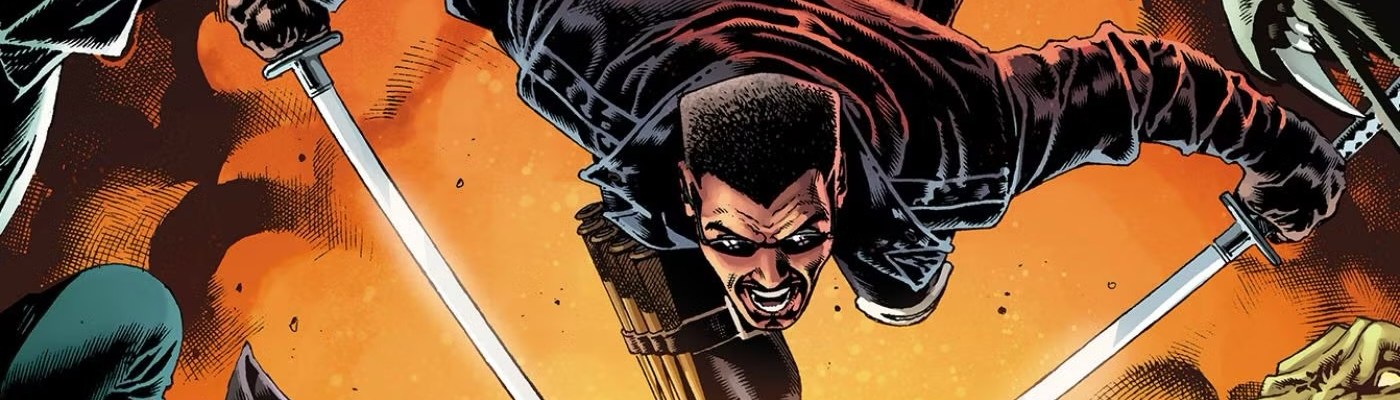


Perhaps it’s fitting that a half-vampire character should linger for so long between life and death. Announced in 2019 with Mahershala Ali onboard and a thunderous Comic-Con reception, the Blade reboot was meant to launch the supernatural wing of the Marvel Cinematic Universe. Six years later, nothing has been filmed. Directors have left, writers have come and gone, and the release date has been quietly removed from Marvel’s schedule. Still, the project refuses to die.
All of this has perplexed fans, who understandably protest that this shouldn’t be hard. Blade is a simple concept, they say: he wears shades, he packs weapons, he bursts into vampire’s safe spaces, gives a knowing grin and then stakes every sucker in the room right through the chest. Cue whoops of delight from the audience. Don’t mess with a winning formula. So why the holdup?
The most recent update came from Kevin Feige himself. In an interview that seemed, at least in part, a direct response to Ali’s increasingly public frustration, Feige finally acknowledged the chaos. “We didn’t want to simply just put a leather outfit on [Ali] and have him start killing vampires,” he said. “It had to be unique.” Earlier drafts, including two set in the past, didn’t meet the studio’s new standard. Feige called that standard “insanely great,” and explained that Marvel “didn’t feel confident that we could improve a script on Blade, and we didn’t want to do that to Mahershala and didn’t want to do that to us.” The film is now being reworked with a new writer and a modern-day setting.
The timing of Feige’s remarks is notable. Just weeks earlier, while promoting Jurassic World: Rebirth, Ali made it clear he wasn’t sure where things stood. “I don’t know where Marvel is at right now,” he said. “I’m just taking it a day at a time and doing the best work I can.” He added, “I would love for Blade to happen,” before signing off with a pointed suggestion: “Call Marvel. Let them know I’m ready.”
That comment was heard loud and clear by seasoned Feige-watchers. It may have been prompted by Wesley Snipes cameoing as the old version of Blade in the recent Deadpool and Wolverine. Was Snipes’s appearance used to send a message to Ali that he’s not necessarily vital?
Ali has been attached to the role since 2019, but online speculation suggests he’s pushed back against multiple versions of the script – especially those that sidelined Blade in favour of a daughter-led story. Whether they contain an element of truth or not, those rumours risk falling into a familiar pattern. A Black actor being positioned as difficult or demanding, and therefore blamed for production delays, risks bad optics for Feige, especially when the underlying issue is more likely that the project had a rushed announcement but never a clear, agreed vision.
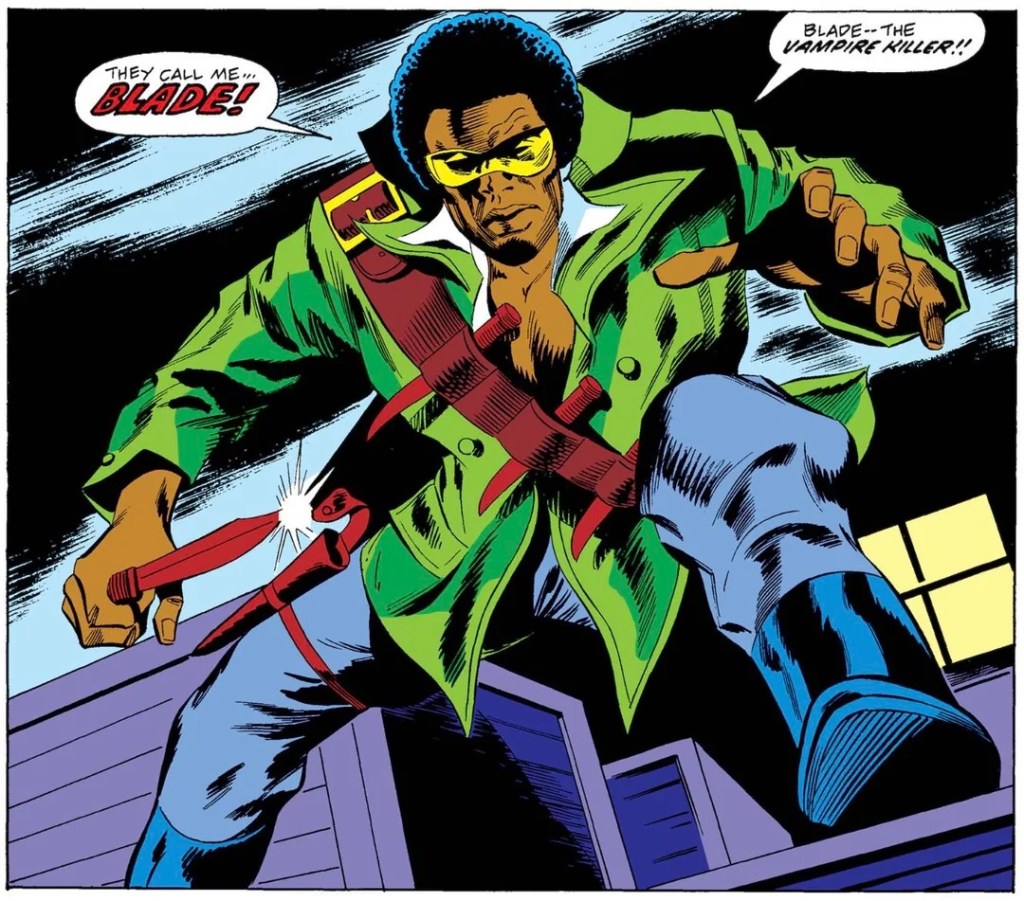
Some of that confusion may stem from the character himself. Comic Blade, who debuted in Tomb of Dracula in 1973, is a very different figure from what most audiences remember. He was British, born in Soho, and shaped by Marvel’s short-lived horror boom of the 1970s. He wasn’t a brooding loner or a martial arts demigod, but a rough-edged, streetwise vampire hunter with a Cockney accent and a jagged moral code. He fought alongside other characters from Marvel’s horror bench—Dracula, Hannibal King, Satana—before fading into obscurity for most of the ’80s.
Then came Snipes. Blade (1998) remade the character into a techno-gothic antihero: silent, ultra-violent, blood-serum injecting and leather-clad. The film arrived a full two years before X-Men, and its influence can’t be overstated. Snipes’ version cut away the kitsch and found something cooler underneath. It worked so well that it became the new template, laying the very foundations for the new wave of comic book movies.
Ali’s version was supposed to be something else entirely. Feige says he wants something fresh. Ali wants something “event-level”, chasing the prestige of Ryan Coogler’s Black Panther. But what that all means specifically is still unresolved. The new film has yet to decide how much of comic Blade to reclaim and how much of the Snipes model to abandon. Is this a grimy London-set horror noir? A brutal action piece about a quiet killer? A quippy fantasy story? Until that question is answered, it’s hard to imagine the delays ending.
What’s most frustrating is that Blade wasn’t just another reboot. It was designed as the foundation for Marvel’s supernatural strand, one of three narrative arms that will carry the MCU forward now that the Multiverse Saga is winding down. The cosmic strand, exploring the intergalactic concerns established by the Guardians of the Galaxy movies, handles the science fiction mythology. The mutant strand is already taking shape with Deadpool & Wolverine and the one-two punch of Doomsday and Secret Wars leading into the long-promised X-Men relaunch. And the supernatural strand was meant to explore darker territory: vampires, demons, cursed bloodlines, forgotten gods. Doctor Strange and Werewolf By Night were supposed to have established a doorway into that world – and Blade was supposed to have kicked it wide open.
Now there’s talk that the character might appear first in a Midnight Sons (or Suns, of you prefer) project. The Sons/Suns are Marvel’s premiere supernatural team, and a Midnight project would be an ensemble piece that could include characters like Moon Knight, Jack Russell, Man-Thing, Elsa Bloodstone, Ghost Rider, Doctor Strange, and, yes, Blade. Such a project might allow Marvel to move ahead with Blade without needing to resolve the solo film’s script troubles. It would also let Marvel introduce the character via the back door, without the pressure of a Blade-centric movie – and rumours suggest that it may even allow Feige to evade contractual obligations linked to Blade, including recasting the role without giving Ali a payout.

But the central problem remains. The original Blade is still sitting there in musty copies of Tomb of Dracula, cocky and British and weird. The first cinematic Blade is preserved in Snipes’ trilogy, taciturn and unstoppable. But the Mahershala Ali version still has no clear shape. The film can’t move forward until someone at Marvel and Ali jointly agree what that version looks like.
Feige says they’re taking their time because they want to get it right. That’s the official line. But the longer this stretches on, the more it feels like Marvel is lost in its own fog, unable to commit to a vision, unable to let go – and haunted by the idea that, as fair as general audiences agree with Wesley Snipes’s cheeky comment from his recent Deadpool and Wolverine cameo – that there’s “only one Blade.”
And yet, even buried in indecision and drafts that go nowhere, the project’s heart still pumps and its blood still flows. Blade refuses to die.
 Whitlock&Pope