


Jarmusch returns to the triptych form, weaving comedy, melancholy, silence and love into three loosely connected tales of family estrangement and reconnection, with standout performances from Adam Driver, Tom Waits and Indya Moore.
★★★½
Jim Jarmusch has always been drawn to fractured structures. Night on Earth criss-crossed five cities in five taxi rides, Coffee and Cigarettes smashed a slew of vignettes into a loose mosaic, and Mystery Train split Memphis into three overlapping stories. Like Mystery Train, Father Mother Sister Brother is a triptych. But its three present-day chapters, set in the Northeastern United States, Dublin, and Paris, are linked less by plot than by motifs and rituals, ordinary gestures repeated until they start to rhyme.
The first section, Father, is the strongest. Adam Driver and Mayim Bialik arrive at the home of their reclusive father, played by Tom Waits – Driver underlines the setting by murmuring that the house is located in “Nowheresville,” as if estrangement itself had a postal code. This stretch of the move is hilarious. The siblings gradually realise their father may not be as in need of their financial support as he may have suggested, with Bialik playing one step ahead of the audience on this, and Driver one step behind. The players bounce off each other beautifully, and Waits’s physicality gives the scene its comic edge; the way he tries to subtly conceal his Rolex is a slyly rendered character note, but more than that its a great gag.
As the first act came to a close, I suspected I may be witnessing one of the best of the fest. However Mother, set in Dublin, falters. Ex-pat English sisters played by Cate Blanchett and Vicky Krieps join their mother Charlotte Rampling for high tea, but what follows is a stiff caricature of awkward, passive-aggressive Englishness. For an English viewer, none of the jokes land as they lack cultural accuracy, and the family bond never convinces. Perhaps it’s because the performers are English, Australian, and Austrian; the accents are fine, but they don’t gel into kinship. Non-English speakers seemed to enjoy it more, perhaps because the exaggerated awkwardness plays more clearly at a distance. In this one Krieps claims she herself lives an hour away in “Nowheresville,” turning the earlier line into a pointed self-portrait.
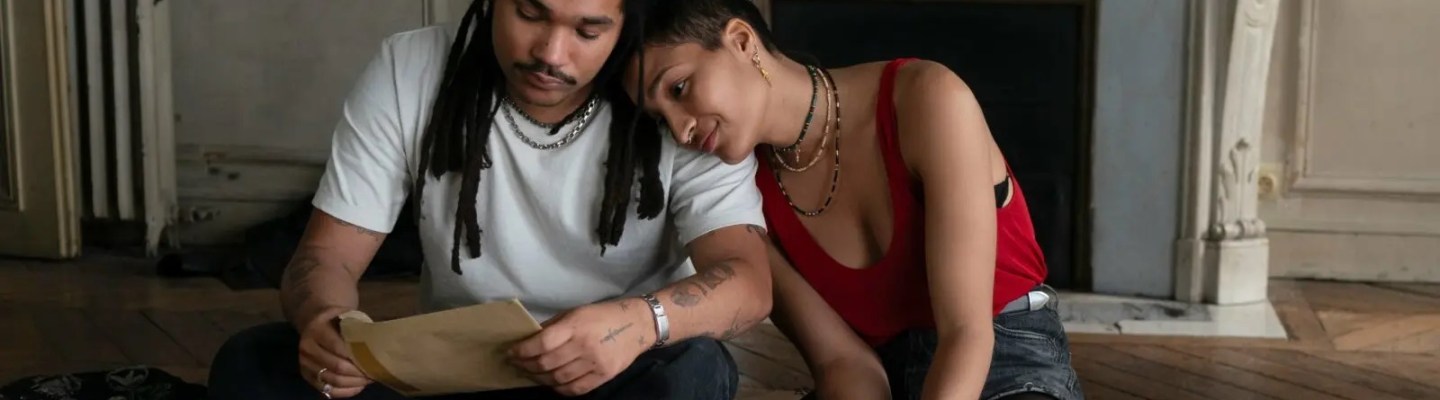
The final and longest chapter, Sister Brother, shifts to Paris, where Indya Moore and Luka Sabbat revisit their mysterious late parents’ empty home before letting it go. With the notion of home feeling ever more transient, Nowheresville again gets a mention. This section isn’t played as comedy at all, but it is sweet and touching, proving the whole with its grace note, and Moore in particular is a revelation, giving the chapter its emotional weight.
The three stories are tied together by small echoes: a Rolex watch, a blue car, skateboarders drifting swirling past the car-bound protagonists (Driver complains they spring up like weeds, but Jarmusch films them with fondness, as small bursts of true freedom), and repeated toasts with tea or water. As in many of Jarmusch’s movies, music plays like a transmission from the depths of the soul. Dusty Springfield’s Spooky plays over the opening credits before resurfacing in Paris, and Nico’s These Days closes the film, pulling it into introspection.
The triptych never sits in perfect balance: Father sparks, Mother misses, before Sister Brother redeems. But the cumulative effect is quietly striking. And the word that echoes loudest is Nowheresville. Jarmusch turns it into a metaphor for estrangement – the nowhere you end up when family ties give way.
Father Mother Sister Brother premiered today the Venice Film Festival, with distribution in place from MUBI.
 Whitlock&Pope
Pingback: Venice Film Festival Rundown – best of the fest. | Whitlock&Pope