


★★★★
Update: Dolly will be in UK cinemas from March 6.
With grimy grindhouse stylings and visceral gore, all shot in glorious 16mm, the jaw-dropping DOLLY is a folk-horror nightmare full of of grit and grotesquerie.
Rod Blackhurst’s debut feature Dolly takes us on a trip to the woods. Chase (Seann William Scott) leads his girlfriend Macy, played by Fabianne Therese, there to a clearing where he plans to propose. She already knows, and while she leans toward saying yes, she admits she is unsure if she can ever be a mother to his daughter. Her own mother, she says, was a “monster,” and that worry lingers under everything that follows.
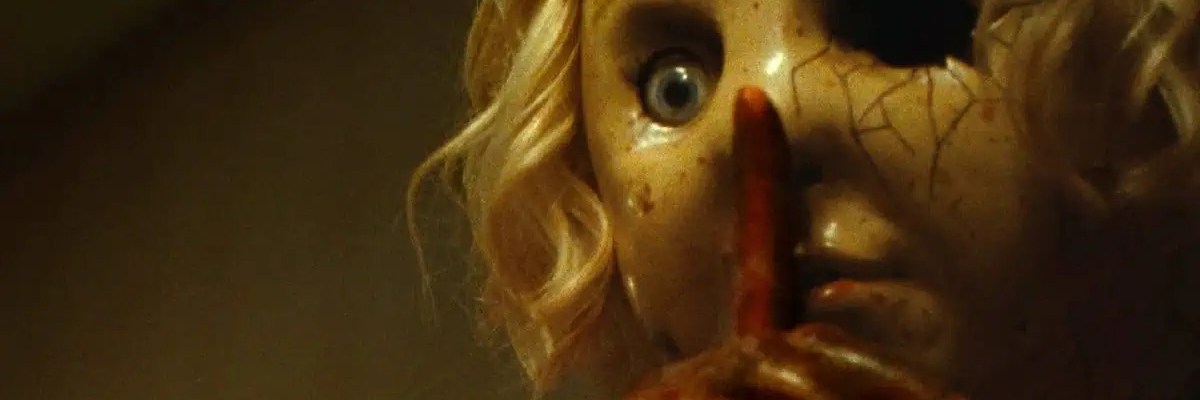
The jaunt unravels when they find dolls hanging in the trees, and a mysterious melody playing in the distance. Wandering from the trail leads them to Dolly, a hulking woman in a porcelain doll mask with the strength to crush a windpipe in one hand. Dealing with Chase in short order, she drags Macy into a twisted domestic space where dolls are protected and people are disposable.
The 16mm photography gives the film a scratched and battered look, closer to a drive-in print than polished digital horror. Blackhurst goes for sudden, shocking turns, and there is a jaw-dropping moment about a third of the way through that is built to make a crowd shout back at the screen. Dolly’s porcelain head design comes courtesy of Dan Martin, the effects genius behind Possessor and Infinity Pool, and goes straight into the top tier of horror masks, that create and twist identity as much as conceal it, while the gnarly gore gags are devised by prosthetics supervisor Ashley Thomas.
The actors keep the chaos anchored – Therese plays Macy with conviction, caught between yearning and fear and Scott stays straight and earnest, even as the story slides into madness. Ethan Suplee appears as Tobe, another captive first heard only through a locked door, which adds an eerie sense of distance before he steps into view. Max the Impaler’s bravura physical performance makes the silent Dolly frightening and absurd at the same time.
Blackhurst has already written a prequel script, positioning Dolly as the opening strike of a larger series. He draws from Grimms’ fairy tales, David Lynch, the New French Extremity, and grindhouse touchstones like Evil Dead, Halloween, and (most overtly) The Texas Chain Saw Massacre as guiding influences, a genealogy that explains the film’s mix of folkloric dread, surreal menace, and brutal gore.
Dolly is raw, loud, and scuffed at the edges. It feels built for midnight screenings where audiences can gasp, scream and laugh together at the excess. My usual credo is “protect the dolls.” But as Dolly shows, there are limits!
Dolly played at Fantastic Fest in Austin, TX. Watch out, it has a post credit scene!
Update: Dolly will be in UK cinemas from March 6.
 Whitlock&Pope