


★★★★
An elegiac 1977 Brazilian thriller that threads pulp intrigue through haunted memory. As tense as it is digressive, The Secret Agent stands among Mendonça Filho’s best.
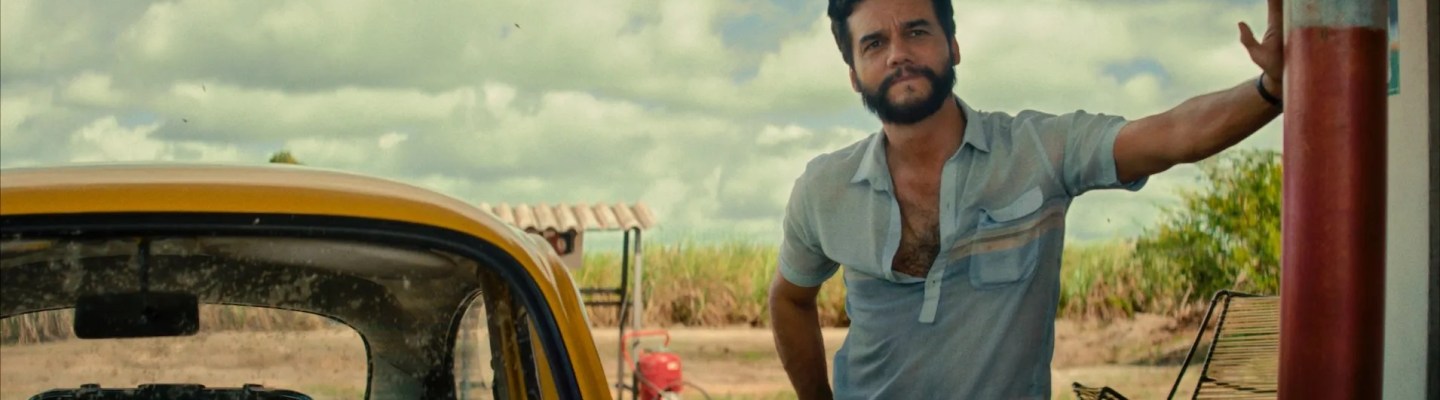
The opening scene announces everything. Marcelo, played with weary conviction by Wagner Moura, pulls his yellow VW Beetle into a rural gas station, where a corpse has been left in the sun, crawling with flies. The police arrive, uninterested in justice and eager only for a bribe. It’s a knockout beginning, a vision of dictatorship in daylight where death is routine and corruption banal.
Mendonça has always worked through space and social weather. Neighboring Sounds traced class tension through Recife’s apartment blocks; Aquarius turned a flat into a battlefield for memory; Bacurau staged a collective revolt in the backlands. The Secret Agent narrows the focus to one man trying to reach his son during Carnival, but the city itself is the true protagonist: an archive of repression, rumour, and survival. The film becomes a precise triumph of place and pressure, turning Recife into a stage where history itself seems to watch.
The craft is lush: cinematographer Evgenia Alexandrova frames Recife as both radiant and bruised, its Carnival delirium colliding with shadows of surveillance; the soundscape is alive with parades, traffic, sudden silences, while the score presses beneath without overwhelming.
Moura carries the film as a man constantly calculating the odds, not a heroic spy but someone who knows the ground is shifting beneath him. Around him flash crooked officials, hustlers, and eccentrics – even Udo Kier in a digressive cameo pitched between menace and absurdity. These diversions recall Elmore Leonard: witty, jagged, full of life, though they sometimes loosen the grip of the thriller.
The indulgence shows in the middle stretch. A magical-realist passage, meant to expand the legend, drifts into overstatement. Information is withheld past the point of tension, leaving stretches that feel shaggy rather than sharp. At 158 minutes, the film carries more fat than it needs; a tighter cut would have made the impact of its best sequences even sharper.
Yet the bookends redeem the excess. The climax delivers a brutal, clarifying burst of action staged with total control. It’s tense and merciless, and it lands with force.
Seen against Mendonça’s career, this is a consolidation. It folds the architecture of Neighboring Sounds, the intimate defiance of Aquarius, and the mythic roar of Bacurau into a haunted personal thriller. That balance explains why Brazilian audiences and critics have embraced him so closely: his films root themselves in national memory yet resonate globally, carrying both anger and play.
For all its indulgences, this film works: the strength of the opening, the command of the climax, and the density of the world in between are all undeniable. It confirms Mendonça Filho as one of the defining voices of contemporary Brazilian cinema, still restless, still searching for new ways to frame memory and power.
The Secret Agent plays at the London Film Festival this month, and streams on MUBI in the UK from February 2026.
 Whitlock&Pope