


Clint Bentley’s Train Dreams finds the vastness of America in the quietest of lives, turning Denis Johnson’s frontier novella into something quietly transcendent.
★★★★★
There’s always one film each year that breaks me open, and this was the one. Train Dreams moves with a calm, steady rhythm, circling back on itself until it feels like breathing. What begins as a simple portrait of a logger and rail worker in the early 1900s becomes a meditation on solitude, labour, and our fragile time on Earth, buffeted by change. Bentley carries something of Malick’s spiritual weight and a flicker of Herzog’s fatalism, yet his tone is gentler – patient, humble, and human. The result is a quiet masterpiece of work, loss, and wonder, built from care rather than grand design.
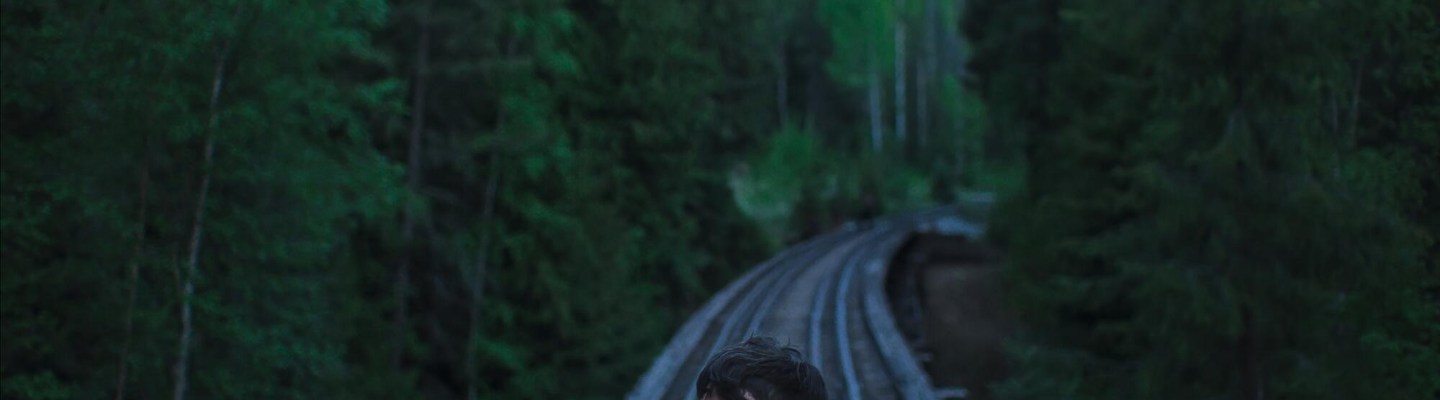
The film unfolds in the American Northwest at the turn of the century, when wilderness was being carved into a new era of industry. Logging camps appear and vanish like travelling towns; rail lines stitch the continent together at impossible cost. Bentley’s attention to detail is almost devotional. You feel every axe bite, crunch of frost, or rattle of a train carriage. Adolpho Veloso’s cinematography captures the region in layers of smoke and dawn light, the forest rendered as something alive and watchful. The wilderness is never just scenery – it has its own will, capable of sheltering or consuming those who cross it. The film becomes as vast and tender as the American landscape itself, alive to both its freedom and its loneliness.
Joel Edgerton’s Robert Grainier is a taciturn man, weary and guarded. He has not been coddled by society, and knows he must rely on his own defences against nature and man alike. His performance traces how a lifetime of labour settles into the body. The stoop of his shoulders says as much as any line of dialogue. Felicity Jones brings warmth to her scenes as his wife, grounding the film’s early joys before loss takes over. Their relationship feels real in its brevity: work, rest, a few moments of peace before the next season begins. Bentley refuses to mythologise this world. He shows its beauty and its cruelty without decoration – the violence toward Chinese labourers, the indifference of nature, and the value of inner peace.
Parker Laramie’s editing carries the story forward in leaps and pauses. Time slips between cuts, sometimes years at once, so that the characters seem to drift through time and space, haunted by eternity, held in history like it was amber. Bentley trusts what’s left unspoken; ellipsis becomes its own language. Bryce Dessner’s restrained score moves beneath the images like weather, and the sound design gives equal weight to water, wind, creaking timber and gasping silence.
Train Dreams finds dignity in the smallest gestures and meaning in work that history overlooks. The film sits at the junction between wilderness and progress, and Bentley carefully observes how one man’s life can mirror a century’s transformation. The camera watches hands and tools with patient reverence, and an honesty in the refusal to reach for grandeur.
By the end, when time has worn everything down, Grainier’s solitude feels inevitable, not tragic. The forest swallows people, until people swallow the forest – and then time swallows everything. There is no grand revelation, only acceptance. the knowledge that to live is to witness and that is blessing enough. Train Dreams is deeply felt, beautifully made, and impossible to forget. In a season of films chasing volume, it listens, and what it hears is the faint, steady rhythm of a world passing into memory.
Train Dreams played at the LFF ahead of a theatrical release and streaming on Netflix.
 Whitlock&Pope