
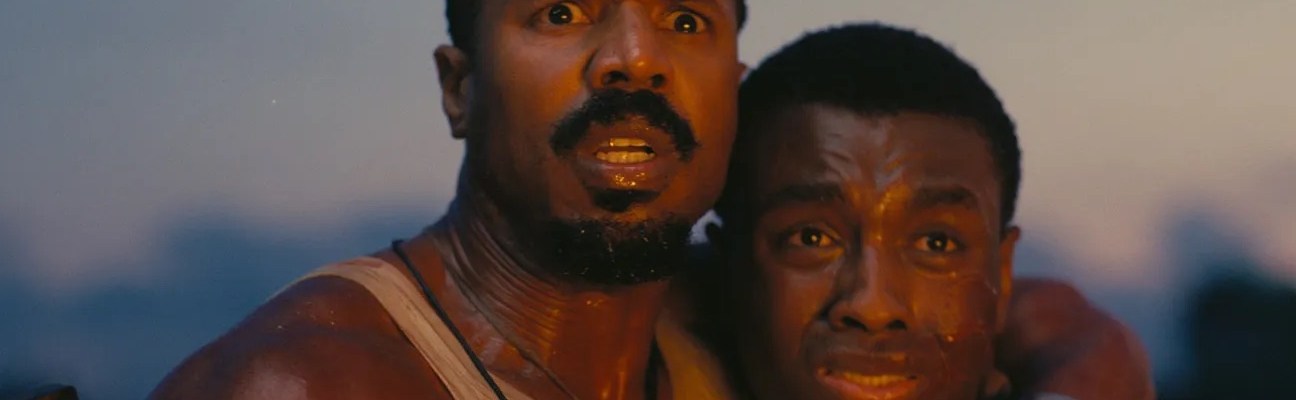


Sight & Sound’s 2025 poll arrives with rare clarity and a sense of coherence: the year now feels shaped around two towering American films: Paul Thomas Anderson’s One Battle After Another and Ryan Coogler’s Sinners. Meanwhile, a major third presence, Chloé Zhao’s Hamnet, lingers downlist behind them, held back perhaps by lack of access (out on Jan 9, for most UK audiences the London Film Festival has been the only opportunity so far to see it.)
Before the number rankings, it is worth saying plainly that this is an unusually strong and aesthetically confident list. What stands out is not just the breadth, from American maximalism to Georgian minimalism, Brazilian paranoia to Moroccan rave mysticism, Iranian political play to British intimacy, but the tonal boldness. This is a list made of films that take swings. That critics have embraced so many works operating through horror, dread, dream logic or pulp mechanics suggests something genuinely new: the old critical suspicion of genre has finally evaporated. Horror is no longer the guest on the fringes of the canon; it is sitting at the centre of the table.
Artistically, cinema looks healthy – the business side may remain unsettled (damn you Zaslav), but on screen 2025 feels restless, generous, political and strange in all the right ways.
And for those tracking awards momentum, this list implicitly sharpens the Oscar race: we now look headed toward a Sinners versus One Battle After Another confrontation, with Hamnet poised as the most plausible late-breaking spoiler once audiences can actually see it.
The Top Ten
- ONE BATTLE AFTER ANOTHER (Paul Thomas Anderson) — ★★★★★
We wrote that “Gloriously funny, breathlessly exciting, and deeply moving” The no. 1 placement was always the most likely result: Anderson has delivered his most widely embraced film in years, a paranoid action comedy with the swagger of 1970s cinema and the bite of a modern political fable. - SINNERS (Ryan Coogler) — ★★★★★
We described Sinners as “a blood-soaked Southern Gothic fable… Coogler’s most personal and most blistering film,” praising its blues-rooted musicality and IMAX-scale ferocity. Critics clearly agree: this is now the other half of the year’s defining creative axis, and a serious Oscar contender. - THE MASTERMIND (Kelly Reichardt) — ★★★★
We wrote that “Reichardt begins in ironic key and ends in grace notes of nothingness, with a loose, jazzy heist film that gradually unwinds into a chilly, deadpan moral tale.” It is quietly audacious, a film that deflates genre expectations while sharpening its moral edges. - SIRĀT (Oliver Laxe) — ★★★½
We said it plays like “a rave-scene Sorcerer with elements of Zabriskie Point and maybe a dash of a much more nihilist Buñuel,” culminating in a finale so wild we had to suppress laughter. Critics echo that sense of ecstatic chaos: a sensorial, dust-blasted endurance trip that swerves between mysticism and absurdity. - THE SECRET AGENT (Kleber Mendonça Filho) — ★★★★
We wrote that it is “an elegiac 1977 Brazilian thriller that threads pulp intrigue through haunted memory. As tense as it is digressive, The Secret Agent stands among Mendonça Filho’s best.” A richly textured political thriller with a shattering final movement. - IT WAS JUST AN ACCIDENT (Jafar Panahi) — ★★★★
We hailed this dark comedy as providing the “cinematic bride of the year,” and admired its taut construction and Panahi’s sly blend of farce and fury. Critics have praised the sharp moral precision and playful tension of one of Panahi’s most accessible works. - SORRY, BABY (Eva Victor) – ★★★★
Eva Victor’s feature debut finds the dark absurd humour in the horror. Some may complain that the depiction of campus life and such-forth was unrealistic. Open the schools! Not every movie is 100% realism and the emotional truth of Sorry, Baby was like a freight train that rattled my windows. - WEAPONS (Zach Cregger) — ★★★★½
We said, of Weapons’ kidnapped kids, that “first they were locked in, then they were locked on” (IYKYK). We loved the film’s structural audacity and wild tonal shifts, and other critics have been similarly struck by its playful risk-taking and mosaic narrative design; this was a bold example of mainstream high-concept American horror. - DRY LEAF (Alexandre Koberidze) – ★★★★
A three hour drifting, low-resolution daydream: part road movie, part film-essay, part melancholy trance. Georgian Koberidze’s follow-up to What Do We See When We Look At The Sky takes a vision quest through a country slowly vanishing as it is replaced by a new version of itself. As a father searches for his daughter, the Koberidze merges the muddy pixels of recent Hong Sang-soo with the slow cinema of Mariano Llinás, so we follow a character seeking resolution even as we are denied it (this is a pun). One for the theorists, the formalists, and the romantics (in the poetic sense). - RESURRECTION (Bi Gan) — ★★★★
We wrote that it is “a curate’s egg… with the good parts very good indeed,” and that “the bravura back end earns the rating,” even as it prompted “the most walkouts of LFF — but they missed the good stuff.” Critics echo this split: an opaque first half redeemed by (among other things) a staggering final sequence that almost recaptures the glory of the director’s earlier Long Day’s Journey Into Night.
Some of the British Films in the Top 50:
PILLION (no. 16 — ★★★)
Well played and nicely edited, but we thought this bittersweet tale of a sub/dom relationship founded without a basis in consent, communication or mutual respect was a bit depressing – without those things this story feels like common or garden abuse, and while that may be the whole point of the tale, it felt like a long 106 minutes until the film ends up more or less agreeing with us. Audiences more on its wavelength may differ in their opinions.
ROSE OF NEVADA (no. 22 — ★★★★★)
We called it “a spellbinding triumph of eerie dread” and “the most poetic folk horror of the decade. I loved this film.” A major achievement from Mark Jenkin.
BLACK BAG (no. 29 — ★★★★)
We said that “in parts this is in the vein of Sleuth or Deathtrap, and there are few veins better,” admiring its theatrical precision and Soderbergh’s restless craft. Critics have responded warmly to its compact, twisty pleasures.
MY FATHER’S SHADOW (no. 32 — ★★★★)
We wrote that “Elegiac, angry, and loving: Akinola Davies Jr. transforms a single day in 1993 Lagos into a living portrait of memory and masculinity.” A quietly devastating film with an extraordinary performance by Ṣọpẹ́ Dìrísù.
DIE MY LOVE (no. 40 — ★★★½)
We were struck by the abrasive emotional architecture and powerhouse performances of Lynne Ramsay’s cinematic scream: this is a formally rapturous cinematic poem about a relationship meltdown. But we questioned its thematic clarity, and whether it succeeds on its own terms.
HAMNET (no. 41 — ★★★★½)
We said that for Zhao to cast “Noah Jupe as Hamlet and Jacobi Jupe as Hamnet” showed she was cinematic “maniac,” and that it Hamnet is “THAT emotional juggernaut… reader, we sobbed.” Its lowish position in the S&S poll reflects access, not taste – Hamnet is out in the UK on Jan 9.
HARD TRUTHS (no. 42 — ★★★★)
Last year we wrote, bluntly: “If BAFTA don’t at least nominate Marianne Jean-Baptiste, judgement will be made.” Critical reaction focused on the same thing: Jean-Baptiste is phenomenal. And yes, she got that nomination. A late triumph for Mike Leigh, it would surely be higher if its votes hadn’t been split between 2024 and 2025.
THE PHOENICIAN SCHEME (no. 48 — ★★★)
The BFI says it’s British, and who are we to judge? We wrote that “the best Wes Anderson movies have something deep and mysterious in them… we didn’t feel that with this one,” calling it “probably Anderson’s least successful picture” while noting how “much better this briefly gets when Jeffrey Wright turns up.” Critics share the sense of muted enthusiasm, which is why this isn’t higher; The Phoenician Scheme fizzes and pops but doesn’t ignite. Mia Threapleton did turn heads as the co-lead, showing that she’s so much more than “Kate Winslet’s daughter.” We’re sure there’s much more to come from her in the future.
Our own best-of will drop once we’ve seen Marty Supreme.
 Whitlock&Pope