


Psychoanalysing Horror Cinema, by Mary Wild (Routledge, 2025)
★★★★★
Psychoanalysis and horror have long shared a dark kinship. Both traffic in the irrational, the repressed, the uncanny; both expose what polite society prefers to keep buried. And yet, despite decades of academic writing on horror, there has been a curiously persistent gap in the literature: a truly accessible, intellectually serious, wide-ranging book that takes horror cinema as a legitimate site for psychoanalytic exploration, not just as metaphor, but as method. Mary Wild’s Psychoanalysing Horror Cinema is that long-awaited text. Ambitious in scope, grounded in clinical theory, and electrified by personal insight, it stands as a major contribution to film writing, and one that feels genuinely new.
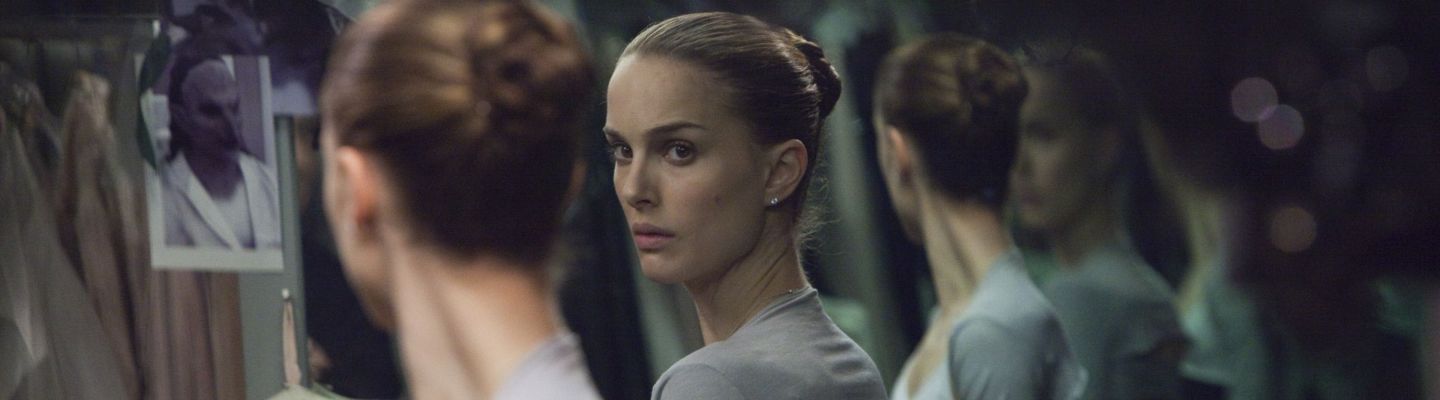
The book expands upon Wild’s celebrated Projections lecture series at the Freud Museum London, and her recurring contributions to the Evolution of Horror podcast, offering close psychoanalytic readings of 50 horror films, grouped by subgenre: Mind, Body, Nature, Aliens, Vampires and Home Invasion. From the opening pages, it’s clear this is no dry academic compendium. Wild writes with precision, passion, and palpable identification with the genre. “If you cut my chest open, Black Swan would be playing inside on a loop,” she confesses – a line that encapsulates both her method and her ethos. This is film theory felt from the inside out.
What distinguishes Psychoanalysing Horror Cinema from previous critical efforts is not simply Wild’s fluency in psychoanalytic theory (though her command of Freudian and Lacanian concepts is impressive) but the affective texture of her writing. Each film becomes an occasion not just for analysis but for introspection. There’s a therapeutic charge to the work: horror is not just studied but engaged with as a site of catharsis, confrontation, and, crucially, transformation.
The range of films discussed is expansive and admirably democratic. Canonical works like Jaws, Invasion of the Body Snatchers (’56 and ’78), and Possession sit alongside cult oddities such as Teeth, The Human Centipede, and Twilight. Wild refuses the usual hierarchy of ‘serious’ horror versus commercial schlock, arguing – through method and example – that even (or especially) the most reviled or dismissed works are dense with psychologically resonant material. Her analysis of Twilight, in particular, is emblematic of this approach: she does not seek to redeem the film by elevating it to high art, but to treat its erotic repression and hysterical fan culture as symptoms worth reading. The same goes for The Human Centipede, whose grotesque premise becomes, in hands of the self-confessed Tom Six fan Wild, an occasion to explore masochistic fantasy and corporeal anxiety without moralising or ridicule.
Elsewhere, some older movies are revisited that have previously been subjected to a lot of psychoanalytic writing – The Birds, or Alien, for example. But Wild’s takes are always fresh, sharp, and personal, never repeating the received dogma regarding those films. But the real draw is seeing the same incisive, playful approach taken to newer material. When have you ever seen a bold, poppy psychoanalytical take on A Girl Walks Home Alone At Night, on Event Horizon, or on Mark Duplass in Creep? Even looking at the index, one’s eyes flit from Martyrs to Nancy Regan. One wonders what she would have made of that.
The theoretical scaffolding of the book is clear and consistent. Freud provides the grounding (repression, the return of the repressed, the uncanny, the death drive), while Lacan offers the language of lack, the Real, and jouissance. But Wild also draws on Julia Kristeva’s theory of abjection, post-Freudian and feminist thought, and the psychological archetypes of Carl Jung (side note from me: is it even possible to understand much modern horror without reference to Jung’s concept of the shadow?). What’s remarkable is how fluidly these frameworks are integrated: they do not dominate the text but support it, illuminating rather than obscuring. Wild has no interest in dry, schematic application of academic concepts – in her hands, the interrogation of horror films comes alive.
This all makes Psychoanalysing Horror Cinema more consistent and focused in its approach than, say, Carol J Clover or Robin Wood, who draw on Freudian concepts in their critical work but do not take psychoanalysis as their main lens. It’s also more accessible than Julia Kristeva’s theoretical writing or the Screen tradition, both primarily academic frameworks and neither centred on horror cinema.
Wild’s reading of Black Swan is a standout, not only for its interpretive depth (focusing on fragmentation, idealisation, and the dissolution of the self), but for the vulnerability with which she approaches it. Wild treats the film not just as an aesthetic object but as a personal touchstone, and in doing so models what a psychoanalytic encounter with film can be: intimate, embodied, ethically charged. Likewise, her discussion of Possession is both rigorous and impassioned, exploring the intersections of political paranoia, erotic frenzy, and psychotic collapse through the lens of Lacan’s Real and feminine jouissance.
Throughout, Wild advances the idea that horror cinema provides a unique space for audiences to process what cannot be spoken – trauma, grief, guilt, taboo desire. “Horror,” she writes elsewhere, “is an unbeatable reprocessing machine.” The films themselves become screens for our projections, fantasies, and disavowed feelings. In this sense, the book also serves as a meta-commentary on the function of criticism: not merely to explain or evaluate, but to facilitate reflection and psychic movement. This is the ideal book for anyone who has ever felt that horror films operate best when they offer a kind of deep-tissue massage for the subconscious – a way to work through all those knots of repression.
Stylistically, the book strikes a careful balance. It is intellectually rich but never obfuscating; deeply theoretical but always readable. Wild writes with clarity and momentum, folding technical terms into sentences with grace. Even readers new to Freud or Lacan will find themselves guided through complex concepts without condescension or jargon. That in itself is a feat.
In a media landscape increasingly saturated with content but impoverished in critical method, Psychoanalysing Horror Cinema arrives as a kind of corrective – and a gift. There are a select number of very few books where horror is treated not just as affect or spectacle, but as a site of psychic truth, and where theory serves as an opening rather than a closure. Psychoanalysing Horror Cinema joins their ranks, with the differentiating point that it brings serious psychoanalytic understanding to a lay audience.
This is a landmark work of film criticism: emotionally intelligent, theoretically rigorous, and truly accessible. Psychoanalysing Horror Cinema is the book we didn’t realise we were waiting for, the essential bridge between horror fandom and psychoanalytic insight. Mary Wild has written a classic-in-the-making, one that will reshape how we think about the genre, and perhaps ourselves.
 Whitlock&Pope