


★★★★★
The best zombie film in 20 years: a vicious, disturbing middle chapter that turns cult sadism and radical empathy into pure nightmare fuel, haunted by the spectre of Jimmy Savile, showing that this franchise still has teeth – and an ending that promises the best may still be yet to come.
28 Days Later (2002) remains the single most important zombie film of the 21st century, sure. But neither of its sequels ever quite matched its cultural or formal shock. 28 Weeks Later (2007) had flashes of ferocity thanks to a couple of scenes ghost-directed by Danny Boyle (most memorably its nerve-shredding opening) but most of the film consisted of competent DVD-bin action movie beats. 28 Years Later (2025), the first part of this new trilogy, was much more thoughtful and ambitious, yet was greeted with a slightly muted response from audiences given the weight of expectation.
Nia DaCosta’s The Bone Temple does something rare. It doesn’t merely clear the bar, it obliterates it. Have no doubt: this is the greatest zombie flick in at least two decades.
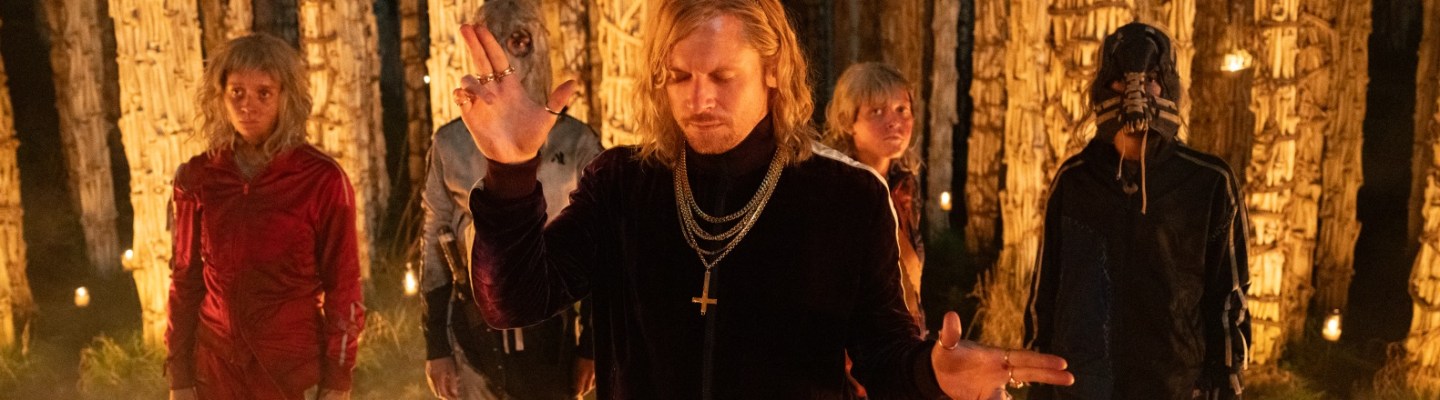
Picking up directly from the previous film’s closing movement, The Bone Temple finds Spike (Alfie Williams) no longer on the run. He’s now a captive of the Jimmys, the sadistic cult teased at the end of Years. The group’s culture is built around half-remembered fragments of British children’s television, particularly the iconography of the notorious paedo- and necrophile DJ Jimmy Savile. Their leader styles himself Sir Lord Jimmy Crystal (Jack O’Connell, iconic and as superb here as he was in Sinners and even more evil). He adopts Savile’s cadences, props, and slogans, including a version of his catchphrase “How’s that?”. Every member of his group, named the ‘Seven Fingers’, is named Jimmy. They dress alike, in fright wigs and tracksuits, occasionally strapping in masks built from cut-up trainers. They move alike, swaggering down ruined paths and acrobatically dispatching the infected. They roam the countryside in search of victims to humiliate and destroy. The only thing they seem to hate more than the infected are the uninfected. Their inheritance is a fallen world, and they gleefully accept it.
This is raucously, viscerally unpleasant material, and deliberately so. What international audiences will make of this excavation of a very specific British cultural trauma is an open question, but its power is undeniable. The Jimmys are the most explicitly sadistic human antagonists the series has produced, and their sequences push the franchise into its most violent territory yet. This is a gang you would believe could flay a pregnant woman alive. Where 28 Years Later earned a UK 15 certificate, The Bone Temple is a hard 18, and never feels coy about it. Spike’s ordeal unfolds as a procession of cruelty, relieved only intermittently by the presence of Jimmy Ink, played with aching restraint by Erin Kellyman, whose gestures of muted empathy feel almost miraculous in this environment.
Running in parallel is the film’s other narrative, centred on Dr Ian Kelson (Ralph Fiennes). Kelson is an eccentric, isolated physician conducting long-term experiments on infected subjects, most notably a hulking alpha figure he has named Samson. He lives beneath his literal bone temple (patiently re-explaining to anyone who’ll listen “it’s an ossuary”), slathered in iodine, spinning Duran Duran records on a wind-up turntable while meticulously cataloguing the effects of psychoactive drugs on the infected mind. It is an image both absurd and melancholy, a man who has survived the end of the world by retreating into ritual and research, into days spent boiling corpses and humming along to Girls on Film.
Yet the relationship between Kelson and Samson is the film’s emotional core. Against all expectation, it is tender, patient, and profoundly moving. Fiennes plays Kelson as a deconstruction of the mad scientist archetype, someone desperately clinging to the idea that care still matters. The history revealed between doctor and patient lands with quiet power, and there are moments here that will catch even hardened viewers off guard. In a franchise defined by panic and rage, these scenes allow space for grief, gentleness, and love… even as these guys chill out with their dicks out in the quiet summer air.
Nia DaCosta snakes these two duelling narratives around each other, and through a ravaged rural landscape of empty cottages, derelict trains, silent woods, and vast skies. Her direction is markedly different from Danny Boyle’s. It is more classical, less jittery, and far less interested in visual frenzy, though she allows herself the occasional iPhone-mounted flourish as a nod to the series’ proudly low-res origins. Where Years was preoccupied with parents and inheritance, The Bone Temple is about children left to raise themselves, about childlessness, broken families, and the seductive danger of belief systems that promise belonging in a world where real kinship has collapsed.
Eventually the two storylines slam into each other, giving DaCosta the opportunity to stage one of the most startling set-pieces of the year. What goes down in the Bone Temple is brutal, weird, emotionally charged, and strangely funny, leading my audience to roar their approval. I was practically levitating off my seat. This is not just a ‘worthy sequel’ – it is the most entertaining zombie film of the 21st century so far.
A concluding chapter is on the way, with Boyle already on record that Spike’s journey will remain the through-line. The film’s coda will certainly get franchise fans excited for what’s next. For now, though, The Bone Temple belongs to Dr Ian Kelson and Sir Lord Jimmy Crystal, figures of stubborn care and absolute nihilism, deep humanism and its total refutation, locked in opposition even before they meet. Its ultimate message could not be clearer: believe in empathy, care for each other, and be ready to receive kindness in return. And even at the end of the world, even with the spectre of Old Nick moving across the face of the land, for god’s sake get therapy.
28 Years Later: The Bone Temple is in UK cinemas from 14 January, and US cinemas from 16 January.
 Whitlock&Pope