


★★★
Buckle up, Buckley-heads, because here comes Maggie Gyllenhaal’s motherfucking Pinterest board! This riot-grrrl revision of the Frankenstein myth is a lavish, unruly spectacle, bursting with ideas and references – and maximum Buckley – but it’s just not stitched together into a living whole.
The America of The Bride! sits somewhere between Depression-era gangster melodrama and mythic feminist fantasia. Maggie Gyllenhaal’s second feature, which reimagines the Bride of Frankenstein concept as a feminist outlaw tale, is set against a landscape of mob families, vaudeville stages, police manhunts and revolutionary whispers. The result is a film that often feels less like a coherent world than a theatrical collage. Every wall carries graffiti. Posters peel away in layers. Characters burst into dance. It is maximalism as design principle. Or, to put it another way, it is riotously overstuffed.
In a stylised 1930s America of gangsters, travelling shows and public hysteria, a gangster’s moll named Ida (Jessie Buckley, great) suffers a psychological crisis that causes her to speak with the voice of author Mary Shelley (Buckley again), calling out the patriarchy. The gangsters kill her, but she is disinterred and resurrected by Frankenstein’s creature (Christian Bale, fine) and Dr Euphronious (Annette Benning, struggling), to serve as “Frankie’s” titular bride. Escaping into the world they become outlaw sensations, pursued by detectives and mob figures while the amnesiac Bride struggles to understand her own identity and power.
This is very much a movie for the precocious 14-year-old theatre kid who just found out about feminism in all of us. Somewhere around the point The Bride spread her arms and shouted “Me Too! ME TOOOOO!” I decided this was not a subtle picture.
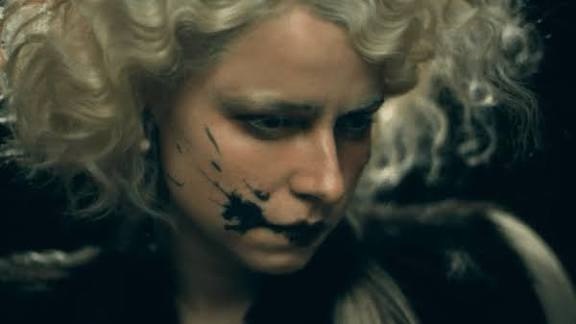
Gyllenhaal has described the film as a way of reclaiming the Bride herself, historically little more than a silent object of horror, and turning her into an agent of rebellion. Buckley plays her as a creature of raw appetite and ecstatic confusion, a being discovering power, pleasure and anger all at once. She goes for broke, turning the monster into a feral icon. Her performance throws everything into the air: camp, fury, heartbreak, vaudeville exuberance. At times it feels like an entire acting career compressed into two hours. Make no mistake, for better or worse this is maximum Buckley.
The film surrounding her tries to match that intensity. Sometimes it does. At other times it simply multiplies ideas until none of them can land, and the maximalism feels like an end in itself. There are a great many plates spinning here: The central outlaw romance evokes Bonnie and Clyde. The backdrop leans into Italian-American mob theatrics. A pair of detectives (Peter Sarsgaard and Penélope Cruz, together at last to no great effect) pursue the Bride and her companion across the country, with their own glass ceiling story. Elsewhere the film becomes a love letter to 1930s musical spectacle, complete with elaborate dance numbers. It also has many more references to Herman Melville’s Bartleby The Scrivener than you were expecting.
On top of that sits the meta-literary thread involving Mary Shelley herself, or perhaps the spectral idea of her – in the film’s best scene, the American Ida becomes possessed by Shelley’s spirit, or perhaps imagines it into being in a fit of schizophrenia, or perhaps dissociative identity disorder, accompanied by a bout of Tourette’s as she blurts out rococo literary and social ideas in a plummy British accent. The scene is dynamic, energised, bewildering… the kind of thing to make you shout it’s alive! Sadly it’s also the first scene in the film. It never gets this good again. Ida’s shattered persona, fractured under the weight of society’s burdens on women, is one of the film’s most intriguing ideas – but it also disappears almost as soon as it arrives.
In fact, the film keeps introducing fascinating threads and then abandoning them. A subplot hints at a rising wave of bride-inspired girl revolutionaries, a kind of monster-punk feminist uprising. It feels like the beating heart of the movie, the idea that could have given all the others shape. Instead it drifts away while new tangents crowd in. I wanted more of those girls! Tap-dancing routines appear, the detectives return, the mob plot thickens. Somewhere in the stew of possibilities Penélope Cruz and Peter Sarsgaard attempt to anchor a procedural narrative that never quite justifies its existence.
The excess extends into the film’s visual language. The production design is astonishingly dense, with every surface seemingly loaded with symbols, slogans and fragments of cultural memory. One unexpected pleasure is simply reading the scenery. Graffiti, chalk scrawls, torn posters and revolutionary slogans crowd the frame. Our lovers hop a freight train marked “G&G,” a cute nod to the director and her actor brother. At another point the Bride runs past a chalk message reading “2+2=5.” A random gesture toward a world turned upside down? Or a sly nod to Orwell’s 1984? In a film drowning in signifiers, it is difficult to tell. The moment captures the film’s larger problem: symbols proliferate faster than meaning. And that’s before you get to the issue of how Mary Shelley (explicitly the author who thought up Frankenstein) and Frankenstein’s creature can both exist in the same reality.
Perhaps you just have to roll with it. For all its unruliness, the movie is rarely dull. This is a grand folly rather than a failure of imagination, with Gyllenhaal’s instincts consistently pushing toward spectacle, texture and theatrical risk. Scenes flare to life in bursts of invention: Buckley stalking across the floor like a newly awakened goddess, musical numbers erupting with vaudeville glee, moments when the film briefly seems on the verge of becoming the anarchic feminist monster epic it clearly wants to be. Then the momentum breaks again, pulled in another direction by another idea.
That restlessness will divide audiences. Some will respond to the film’s sheer ambition, its refusal to behave like a normal studio monster picture. Others may find themselves wishing that just one of its many impulses had been allowed to develop fully. The movie keeps reaching for revelation, only to scatter its energy elsewhere.
Still, there is something admirable about the attempt. In a landscape crowded with safe franchise maintenance, a film this strange and excessive has a certain value. This lavish monster is stitched from too many underdeveloped ideas, but Buckley’s feral performance gives it some spark. A grand folly, then, but far preferable to inanimate corpses that the streamers tend to offer up. If this is the end of WB’s two-year run of big swings, then it’s a miss. But what a swing!
The Bride! is in cinemas now
 Whitlock&Pope