


SXSW has always been the least orderly of the major festivals – and that was before Austin was deluged with driverless Waymo taxis. The premieres arrive with fanfare, but if history is any guide the real discoveries will surface somewhere in the middle of the programme, late at night, when audiences are ferried by those haunting AI cars (be careful, festival-goers!) towards a film they know almost nothing about but leave convinced they’ve found something special.
This is our kind of festival – one where genre cinema, strange tonal hybrids and outright oddities regularly sit alongside more traditional indie fare. Horror runs through the slate, but so do offbeat comedies, prickly character studies and films that seem to exist slightly outside easy categorisation. This is exactly the sort of line-up that rewards curiosity. Here is our pick of the genre standouts from the fest – focusing, as ever, on horror, the fantastique, the absurd, and the straight-up weird.
Several titles arrive with the buzz already up-and-running: Ready or Not 2: Here I Come brings Samara Weaving back into the blood-soaked hide-and-seek mythology that made the original such a crowd favourite. We love films that treat horror with a sense of mischief, and the sequel looks poised to deliver the same blend of slapstick cruelty and class satire.
Irish horror filmmaker Damien McCarthy also returns with Hokum. His previous feature Oddity became one of the more admired genre breakouts of the past couple of years, so expectations are understandably high for the follow-up. The premise reportedly circles a man drawn into the orbit of a rural coven, which suits us – we’re far from sated on folk-horror chills.
Several other titles look set to explode as forcefully as one of Austin’s many cybertrucks (seriously, I see one every time I’m there). They Will Kill You is a high-octane horror-action-comedy set inside a Manhattan high-rise with a history of disappearances and a cult lurking within it. Leviticus turns toward queer supernatural horror, following two teenage boys in a conservative Christian community as desire, repression and a malevolent force close in around them. Dead Eyes goes stranger still, using a first-person perspective to follow a search through remote woodland that ends in grief, cloning experiments and the possibility of resurrection. Never After Dark shifts the emphasis from spectacle to menace, sending a wandering medium to an isolated country house where the supernatural threat gives way to something more human and more dangerous. Then there are Sender and Drag: the former spirals into paranoia through a barrage of unwanted packages and targeted consumer dread, while the latter begins with a robbery and twists into a comedy-horror nightmare when two sisters find themselves trapped before the homeowner returns.
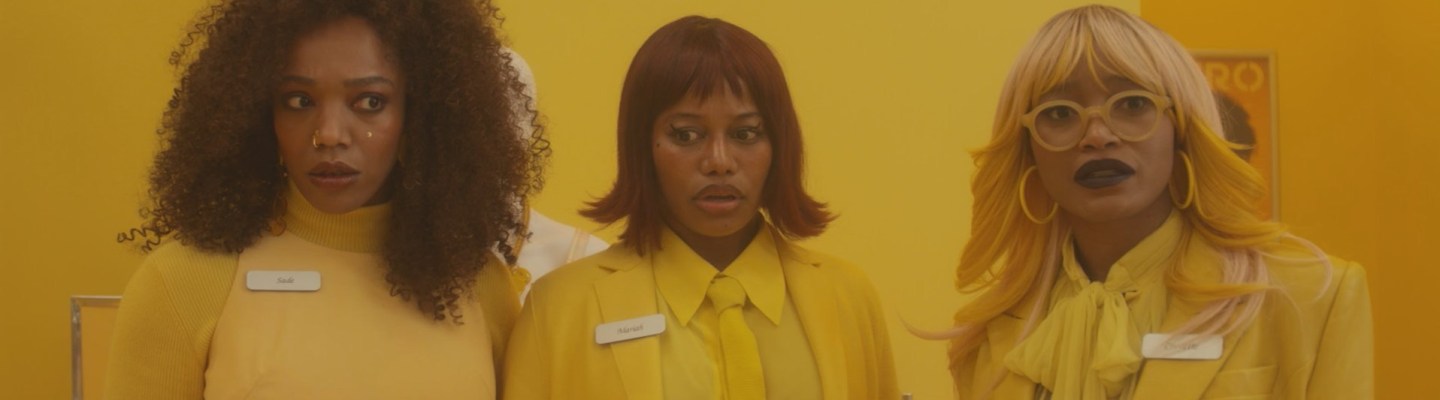
Elsewhere in the festival’s smorgasbord of eccentric concepts, I Love Boosters finds Boots Riley returning to the arena of anarchic satire with a crime story centred on a crew of professional shoplifters who target a ruthless fashion mogul, a premise that folds anti-consumerist politics into gleeful criminal mischief. Pretty Lethal is similarly idiosyncratic, building its story around a troupe of ballerinas who find themselves fighting for survival as they attempt to escape from a remote inn when their bus breaks down on the way to a dance competition. that tends to follow it. American Dollhouse and Family Movie both operate in the uneasy territory of domestic life turning strange, the familiar spaces of family and home gradually proving to be less reliable than you’d think. DreamQuil drifts toward the surreal, exploring a pharmaceutical sleep aid whose side effects blur the line between dreams and waking life, while films like Normal, Kill Me and Wishful Thinking circle characters whose sense of identity or reality begins to slip, the kind of psychological territory where SXSW often uncovers its most quietly disquieting work.
Elsewhere the programme continues SXSW’s affection for eccentric character pieces and tonal left turns. Mike & Nick & Nick & Alice leans into full-tilt ensemble chaos, a stylised action-comedy about two gangsters and the woman they both love trying to survive a single disastrous night, reportedly involving a time machine along the way. Imposters pushes further into genre territory: after a couple’s baby is abducted, the mother finds a way to bring him back, only for her husband to suspect the child who returns is not actually their son. Monitor centres on a social-media moderator who unleashes something deadly after refusing to publish a cryptic video. Buddy takes a more surreal turn (as befits a film by Casper “Too Many Cooks” Kelly, following a girl and her friends attempting to escape from a children’s television show. Elsewhere, titles such as Rock Springs, Basic and The Fox point toward character-driven storytelling rooted in specific places and personalities, while the provocatively titled Chilli Fingers begins with the discovery of a severed human finger in a bowl of chili, an incident that pushes its protagonist toward seizing control of her stagnant life. Witchy comedy-horror Forbidden Fruits and workplace-themed horror anthology Grind hint at the kind of mischievous tonal territory SXSW often favours, where dark humour and discomfort share the same space.
The programme also finds space for films that turn the lens back toward culture itself. The Last Critic centres on a once-influential film critic whose career collapses after a public scandal, forcing him to confront the relevance of criticism in an industry that has largely moved on without him. Seekers of Infinite Love moves in a more spiritual direction, following a family who embark on a road trip to “save” their daughter from a cult, while The Saviors follows a suburban couple whose life spirals out of control when they rent their garage to mysterious tenants. Obsession and Over Your Dead Body shift the tone toward darker psychological territory, stories built around fixation, identity and the destructive pull of unresolved desire. It’s a thread within the programme that favours ideas and character over spectacle, films interested in how belief, devotion and cultural authority take hold.
As always with SXSW, however, the most interesting part of the programme may be the discoveries hiding a little further down the schedule.
One of the most intriguing of those possibilities is Black Zombie. Rather than treating the zombie as disposable horror shorthand, the film looks to reach back into the mythology’s Haitian roots and the colonial history behind it. This documentary promises to be one of the most politically charged zombie films in years, reconnecting the genre monster to the historical trauma that created it.
Fifteen is the tale of an outcast schoolgirl impregnated with a demon in the run-up to her quinceañera. She seeks a termination, but as the cryptid foetus assumes control of her personality she becomes more and more popular with her schoolmates. Advance word suggests a backstreet clinic scene that will leave audiences debating what should or should not be played for Raimi-esque laughs.
Anima pushes into psychological speculative fiction territory, following a young woman desperate for money who takes a job driving a sick Japanese man to an appointment to have his consciousness digitised – a process that will be lethal. SXSW audiences have historically been receptive to that kind of provocative filmmaking, particularly when it foregrounds a hip soundtrack.
Then there is Bagworm, which may well be the strangest premise in the entire programme. The film follows a hammer salesman, who wanders through a set of unsettling work incidents and romantic encounters while succumbing to hallucinations after standing on a rusty nail. The central question: is the world going insane, or is he just succumbing to tetanus? Midnight audiences have always had a taste for films that operate on that fever-dream wavelength, and if this one commits fully to its atmosphere it may emerge as one of the year’s most haunting midnight oddities.
Finally there is Ugly Cry, which sits on the brink the current wave of intimate body horror but approaches it from an unusually grounded and angle. When a struggling actress is told she isn’t right for a plum role because she has an “ugly cry,” she considers what it might take to correct that. Cooking on like the real story behind The Substance, or like Starry Eyes without the supernatural element and with a lot of Botox, this promises to be a queasy little LA body-horror drama that audiences won’t stop talking about.
Predicting the defining film of SXSW is rarely successful. The titles that look dominant when the programme launches are not always the ones people are still discussing by the final weekend. What SXSW rewards instead is curiosity: the willingness to wander into a screening with minimal expectations and see what happens. If tradition holds, the film people are still talking about when SXSW 2026 closes is already somewhere in the programme, waiting for the right audience to find it. And there is a strong chance it is one of the strange little discoveries currently hiding in plain sight.
Picture: I love Boosters
SXSW 2026 launches in Austin, TX, tomorrow.
 Whitlock&Pope