


A potent slice of Māori colonial gothic that earns its place in the “good for her” cinematic universe.
★★★★
Taratoa Stappard’s Mārama reclaims the Victorian gothic from the imperial centre and redirects it toward a reckoning with colonial violence. Set in 1859, the film follows Mary Stevens, a young Māori woman who travels from Aotearoa to a remote English manor in search of answers about her ancestry. Employed as a governess, Mary soon discovers that the house’s abundance is built upon the extraction of her nation’s wealth, all dressed up with handsome displays of stolen Māori artefacts.
As Mary probes deeper into the estate’s history, the narrative reveals a haunting rooted not in abstract malevolence but in the legacies of colonial domination and sexual coercion, leading back to her own history – and transforming the familiar trappings of the gothic into a vehicle for restitution and rage.
Very much a “good for her” revenge tale, Mārama derives its power from the gradual alignment of personal identity with historical reckoning. The mystery is anchored in sexual corruption, unapologetically linking colonial authority to coercive exploitation.
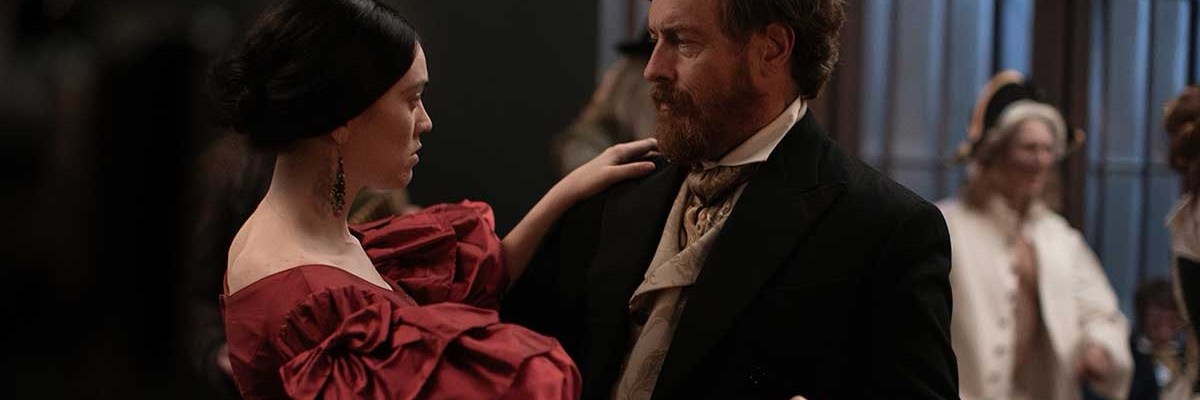
Not everyone in the cast can match the material’s emotional demands, but Ariāna Osborne delivers performance fireworks. Her Mary is at once vulnerable and implacable, grounding the film’s supernatural elements in a palpable sense of historical grief and righteous fury. The film’s most unforgettable sequence arrives midway through, when Mary responds to a tawdry and glib pantomime of cultural appropriation at a house party by performing a furious haka. The moment, intended as a roar of defiance, is met with cheerful applause, transforming the scene into one of singular nightmarish despair and crystallising the film’s critique of colonial voyeurism. Osborne’s complex, controlled intensity here makes this the centrepiece of her performance.
Stappard’s direction leans into the classical grammar of the gothic: shadowed corridors, oppressive interiors, and a persistent sense of ancestral presence. When the narrative finally clarifies its central mystery, the film achieves a dark power that proves deeply satisfying.
The dramatic climax (best left unspoiled) delivers a cathartic convergence of personal and historical forces, in an explosion of cultural and emotional restitution. However, having encouraged the audience to solve its central enigma the film then over-explains what is already apparent, slowing its momentum and losing a little power.
If Mārama occasionally falters through variable supporting performances and that final overemphasis on exposition, these shortcomings do little to diminish its impact. As both a genre piece and a political intervention, the film stands as a compelling reconfiguration of gothic traditions through an Indigenous lens. It is a story of reclamation as much as revenge, where the ghosts of empire refuse to remain silent, and the righteous fury of the living burns with incandescence.
Mārama played at the Overlook Film Festival in New Orleans.
 Whitlock&Pope